Many collectors have various reasons for collecting, some collect because they like a certain style, others collect for the beauty and artistic nature of an item, and still others collect because a particular object helps them recall a certain memory. However, the underlying reason many people collect is for
future value or expected profit.
Modern glass collecting dates back for more than a hundred years, and has made quite a few people, handsome returns on their investment. The 1950s saw many collectors and antique dealers hording the early American pattern glass from the 1890s to 1920s period. The late 1900s saw a surge in interest towards the glass of the 20s and 30s known as
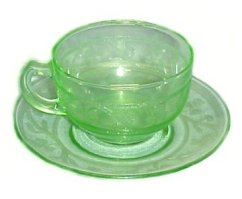
depression glass, By the dawn of the new millennium, depression glass was the number one antique glass being collected in the world. As the 21st century broke, Hazel Atlas glass from the 1940s and 50s started to show an increase in collectors and price trends.
Historically, a particular field of glass becomes popular around 50 years after the production. This is mainly because the previous generation recalls the glass from their childhood and desires to have it again. Subsequently, the growth in interest for a particular glass then causes the price to increase which further increases the demand, starting a cyclic trend.
The
Hazel Atlas Glass Company produced a huge amount of different glassware for the home from the 1920s until the late 1950s. Much of the Hazel Atlas glass remained in the USA, although, a limited amount was sent to Canada and the UK during the 1950s. Recently, collectors from Japan, Germany, and the UK have found
Hazel Atlas Glass to be a desirable and collectible glass. Sellers on Internet sites and auctions have reported sending Hazel Atlas Glass to all corners of the world as the trend towards this glass heightens and the price value increases.
Concentrating your collection on the items that consistently increase in popularity and value is the key to maximizing your collection's value. Although many
Hazel Atlas glass pieces are collectible, certain pieces tend to outperform others in the marketplace. You need to recognize what items are constantly in demand and which items are just a recent fad, for long term investment. Paying attention to what other collectors are buying is helpful in spotting trends in the market. When the demand for a particular item is high, the price will tend to follow that demand.
A good example is the Hazel Atlas Pineapple Jam Jar. This piece is sought after consistently by collectors, as it is the one piece missing in several collections. When found, it easily will sell for $50 to $100, and has been reported to sell as much as $200. Literally hundreds of the Pineapple jars sat around for years, before it was discovered they were made by Hazel Atlas, dealers were able to buy them for next to nothing. Yet, a serious collector is willing to shell out hundreds for it.
Keeping abreast of the current trends in Hazel Atlas glass is the key to knowing
what is worth the money and what is just common glassware. Most Hazel Atlas glass items are easily recognized, once you have seen a few pictures of their types of ware. A great place to start to learn is through the Hazel Atlas glass collectors website or the
Hazel Atlas newsletter.